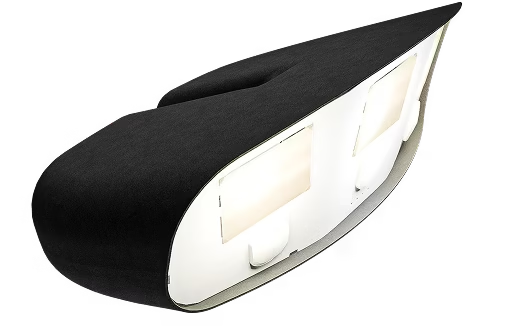
Sunlight is one of the strongest signals the human body responds to. Long before artificial lighting, daily exposure to natural light helped regulate alertness, sleep, hormones and internal rhythm. Modern life has moved much of that exposure indoors, softening these signals. Sunwell’s approach is built on how sunlight functions in nature – translating its biological role into indoor spaces where natural light is often limited.
Sunlight contains a wide range of wavelengths that affect both vision and brain activity. Bright, full-spectrum light is linked to daytime alertness, focus and stable circadian timing. It is also used in light therapy for Seasonal Affective Disorder (SAD) and studied for its influence on mood and daytime energy. Most indoor lighting is comparatively dim and spectrally narrow. The Sunwell Simulator restores key daylight qualities indoors, delivering a clearer biological signal during waking hours.
Ultraviolet light plays a biological role that visible light does not. UVB radiation initiates vitamin D production in the skin, a process connected to bone health, immune function and metabolic regulation. Vitamin D insufficiency is widespread, particularly in regions with long, low-light seasons. Because UV interacts directly with the body, precise control matters. Filtered, low-dose UV allows this natural process to be supported indoors in a measured and predictable way, aligned with established safety standards.
Infrared radiation delivers warmth as radiant energy rather than surface heat. This type of warmth is associated with increased circulation, muscle relaxation and physical comfort. Infrared heat is widely used in rehabilitation and wellness environments for its calming effect on the body. When combined with light, it contributes to a steady sensory environment that supports relaxation and ease without overwhelming the system.
People worldwide are estimated to have insufficient vitamin D levels.
Brief daily sun exposure supports vitamin D production.
Up to 90% of vitamin D is produced through UV exposure.
Light exposure influences
melatonin and sleep regulation.
Many people spend over 13 hours
a day indoors with low light.
Morning light strengthens signals that set the circadian rhythm.
People worldwide are estimated to have insufficient vitamin D levels.
Brief daily sun exposure supports vitamin D production.
Up to 90% of vitamin D is produced through UV exposure.
Light exposure influences
melatonin and sleep regulation.
Many people spend over 13 hours
a day indoors with low light.
Morning light strengthens signals that set the circadian rhythm.

Changes in daylight across the year influence energy, mood and sleep for many people. Reduced light during darker months is commonly associated with fatigue, lower mood and disrupted daily rhythm. Bright light therapy has been studied for decades as a non-pharmacological approach to seasonal mood changes, with consistent focus on daytime alertness, emotional balance and sleep–wake stability. Together, this research highlights light intensity and spectrum as meaningful environmental factors in modern indoor life.
People today spend most waking hours under artificial light, increasingly disconnected from natural daylight patterns. Research in neuroscience and public health shows that light exposure influences sleep quality, metabolic regulation and cognitive performance across the lifespan. Studies associate regular daylight exposure with healthier ageing and lower all-cause mortality, when balanced with skin safety. In care, recovery and work environments, brighter daytime light is consistently linked to calmer behaviour, improved engagement and more stable daily routines. Light has emerged as a foundational environmental input shaping human health in modern life.
S1 brings sunlight indoors in its most refined form. Full-spectrum light, safe UV, and vitamin D.
Considering adding more light to your home, spa, or care setting? Our team will reach out to guide you on what’s possible and the next steps.
"*" indicates required fields